

It is a true honor and joy to present Bharat Tripathi’s catalogue “Anjaneya,” a visual tribute to one of the most cherished and enduring figures in Indian mythology: Lord Hanuman.
Within these pages, the artist welcomes us into a realm where devotion intertwines with creativity, reinterpreting Hanuman’s timeless essence through vibrant brushwork, shapes, and colours. Each piece pays homage not only to Hanuman’s various divine incarnations but also to the lasting human values he represents, unwavering devotion, immense strength, humility in service, and fearless righteousness.
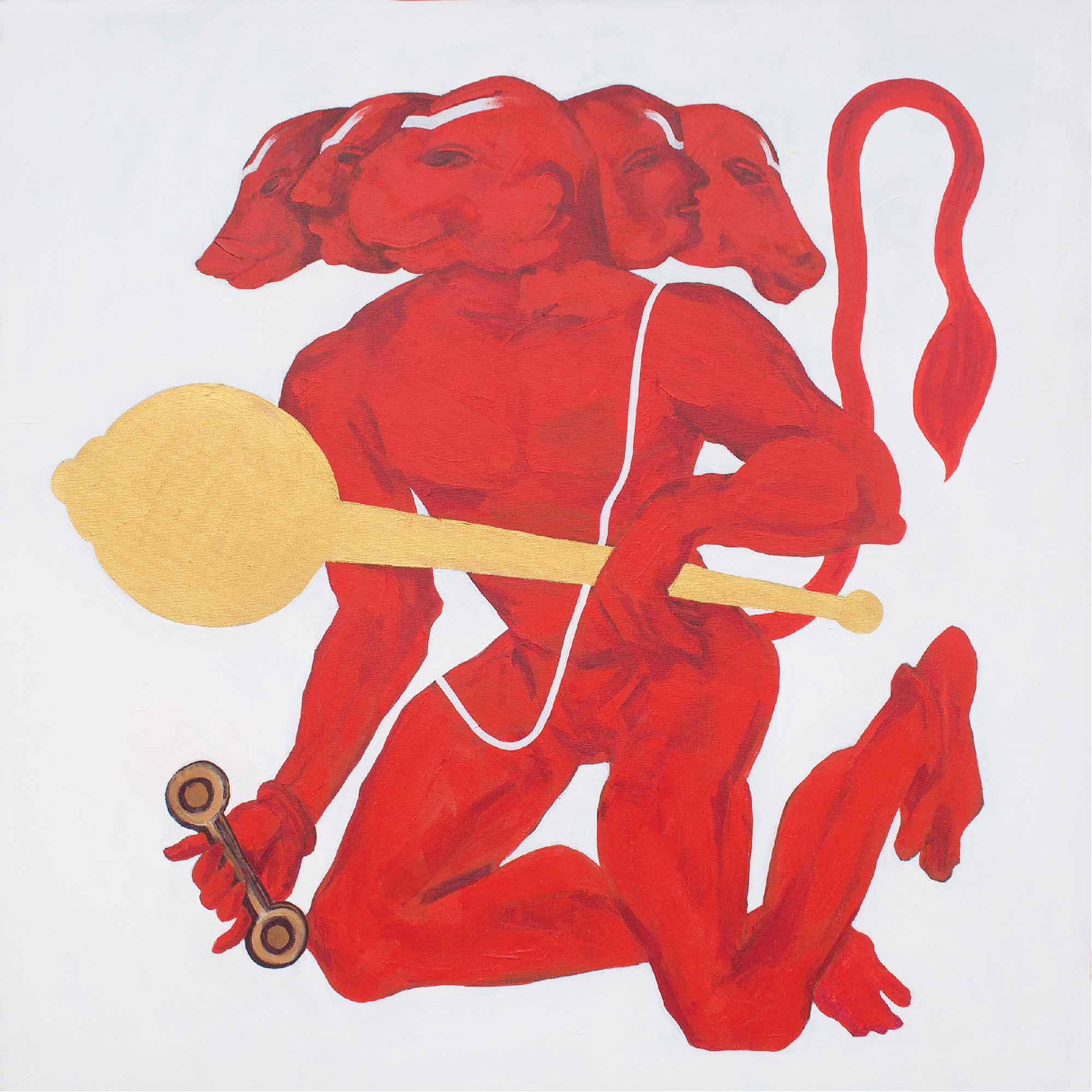
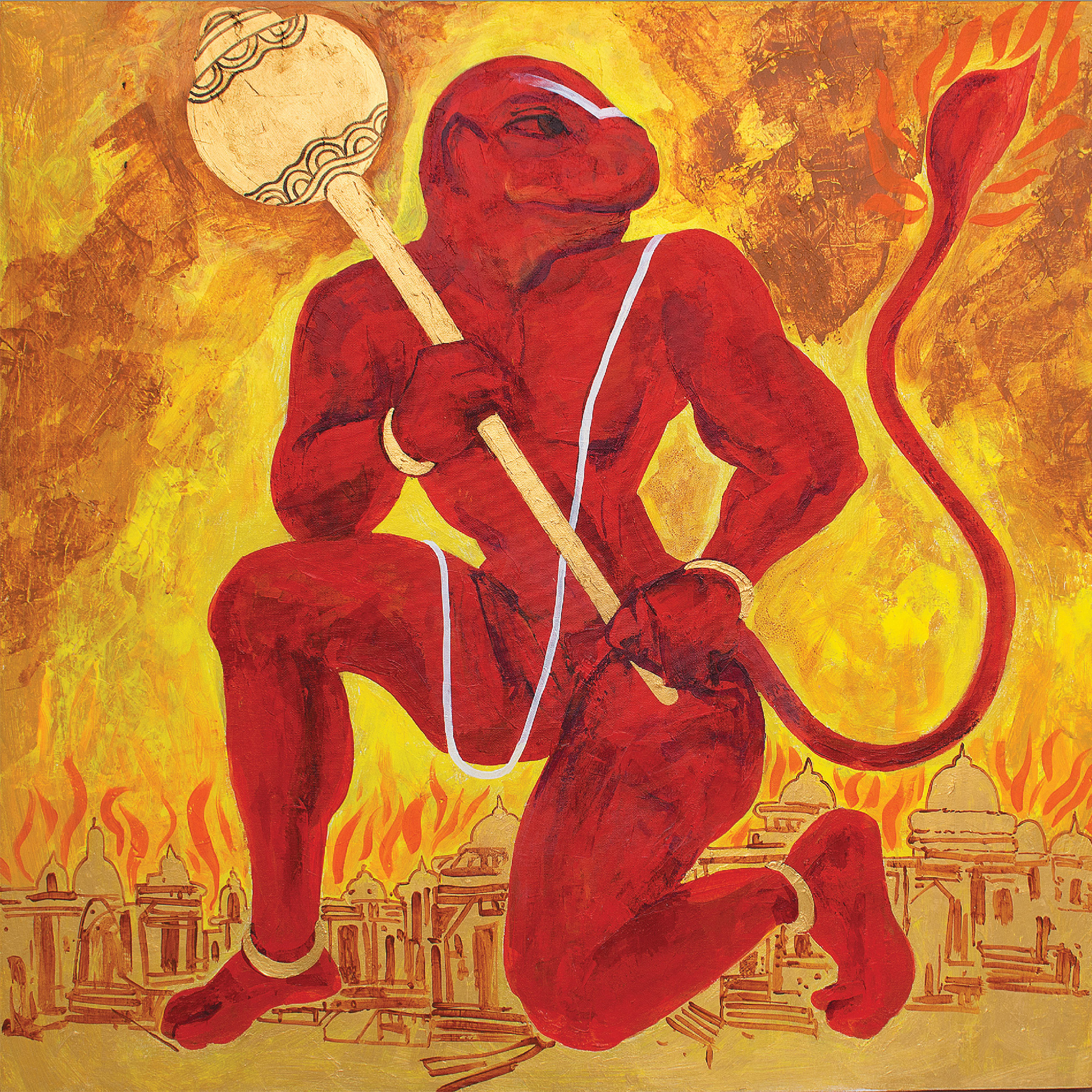
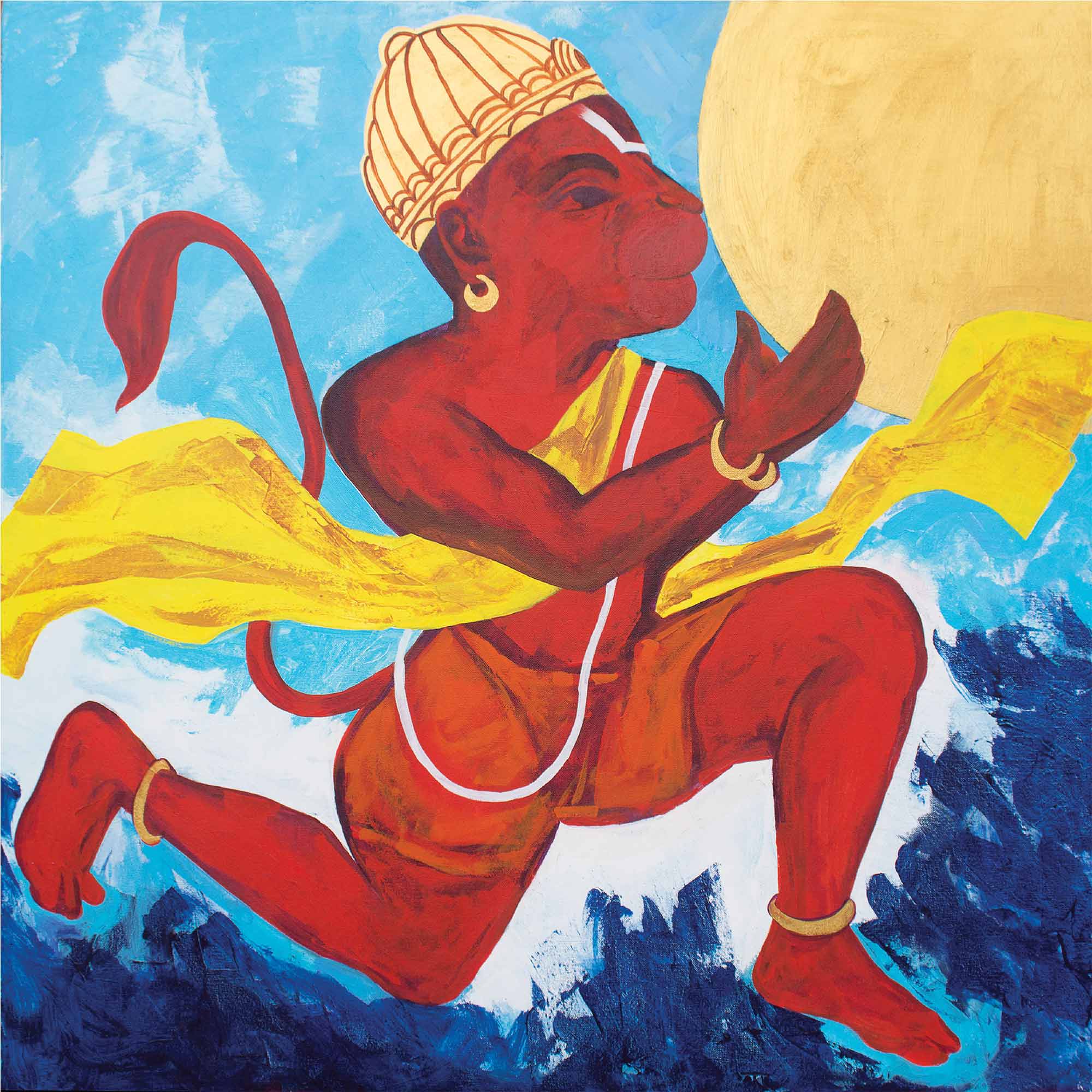
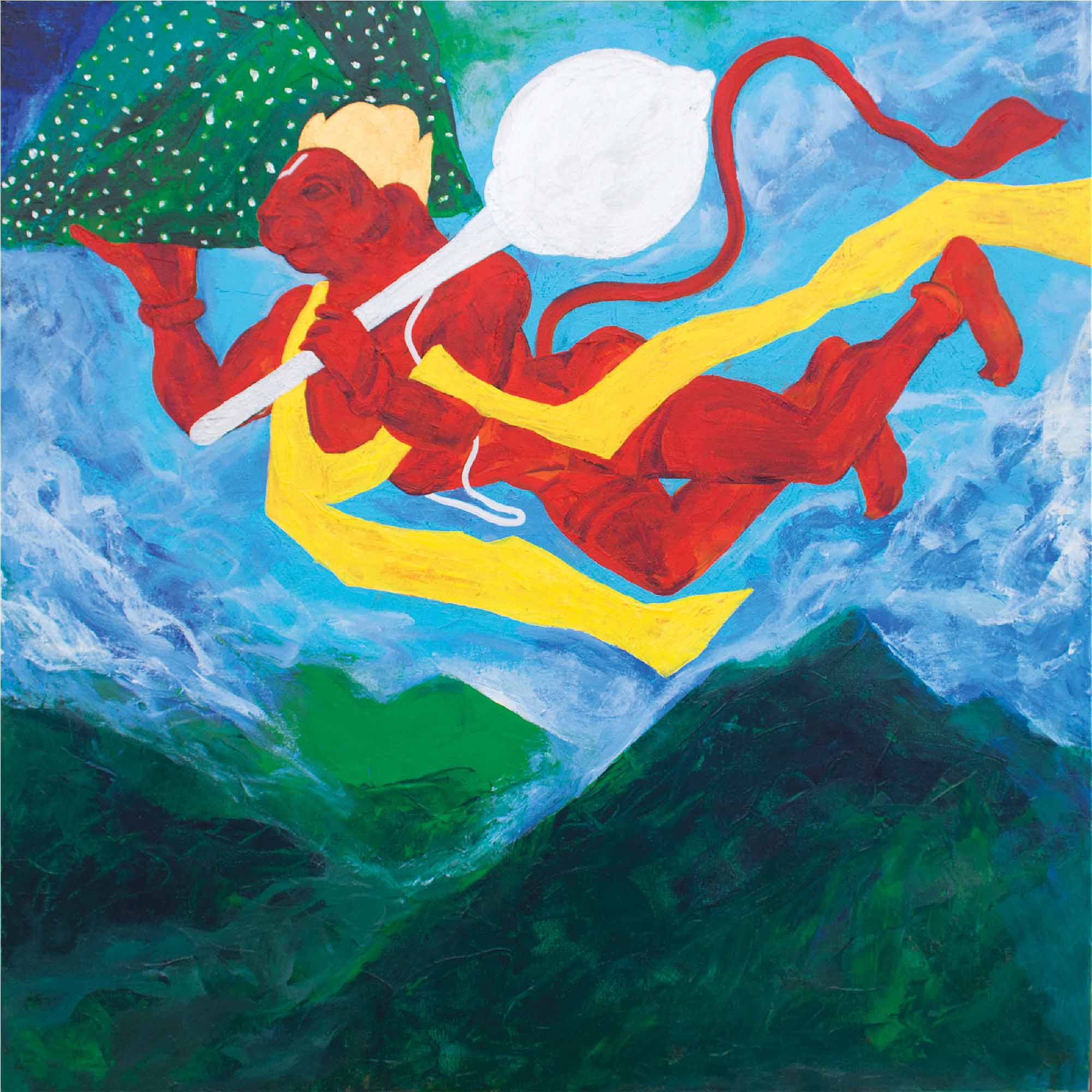
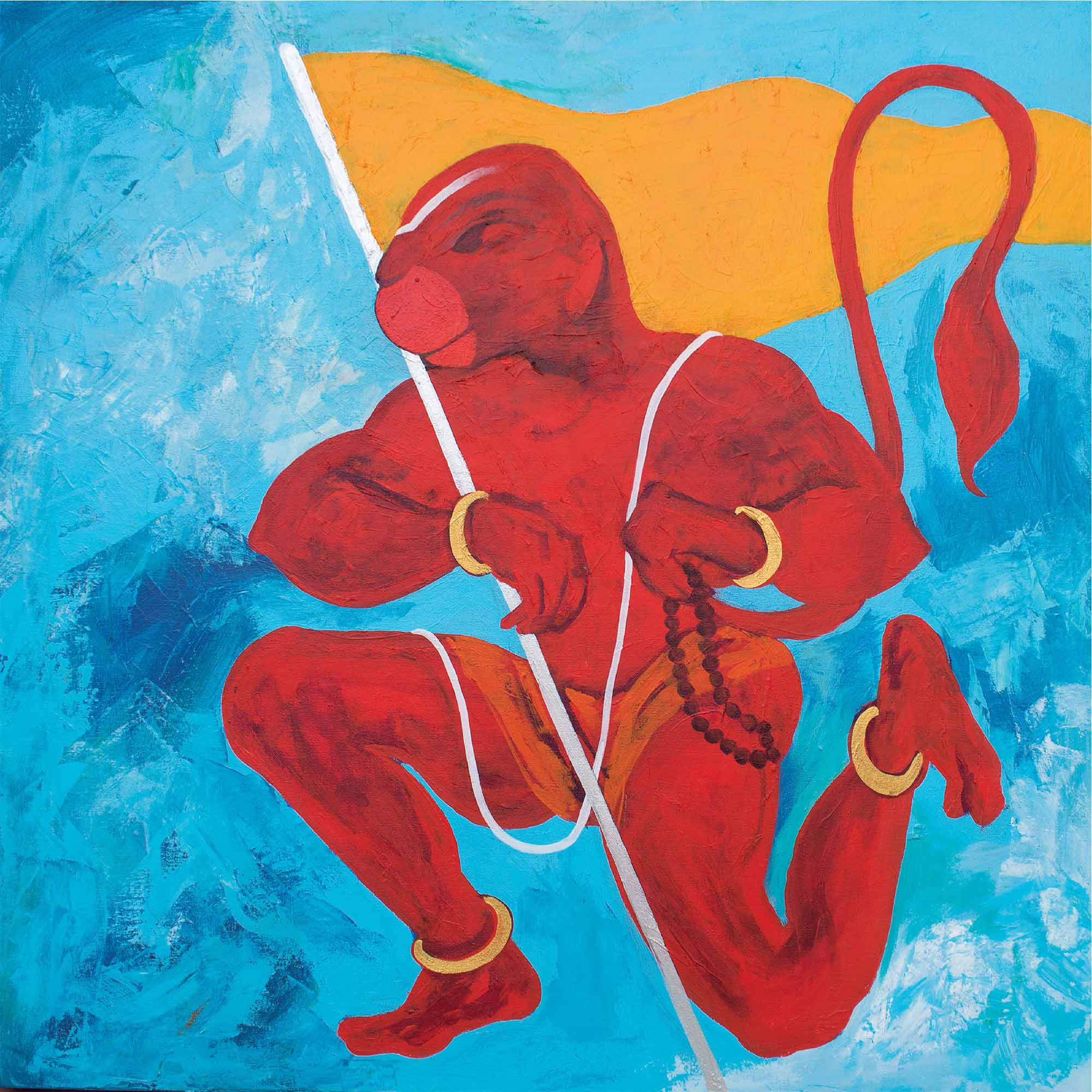
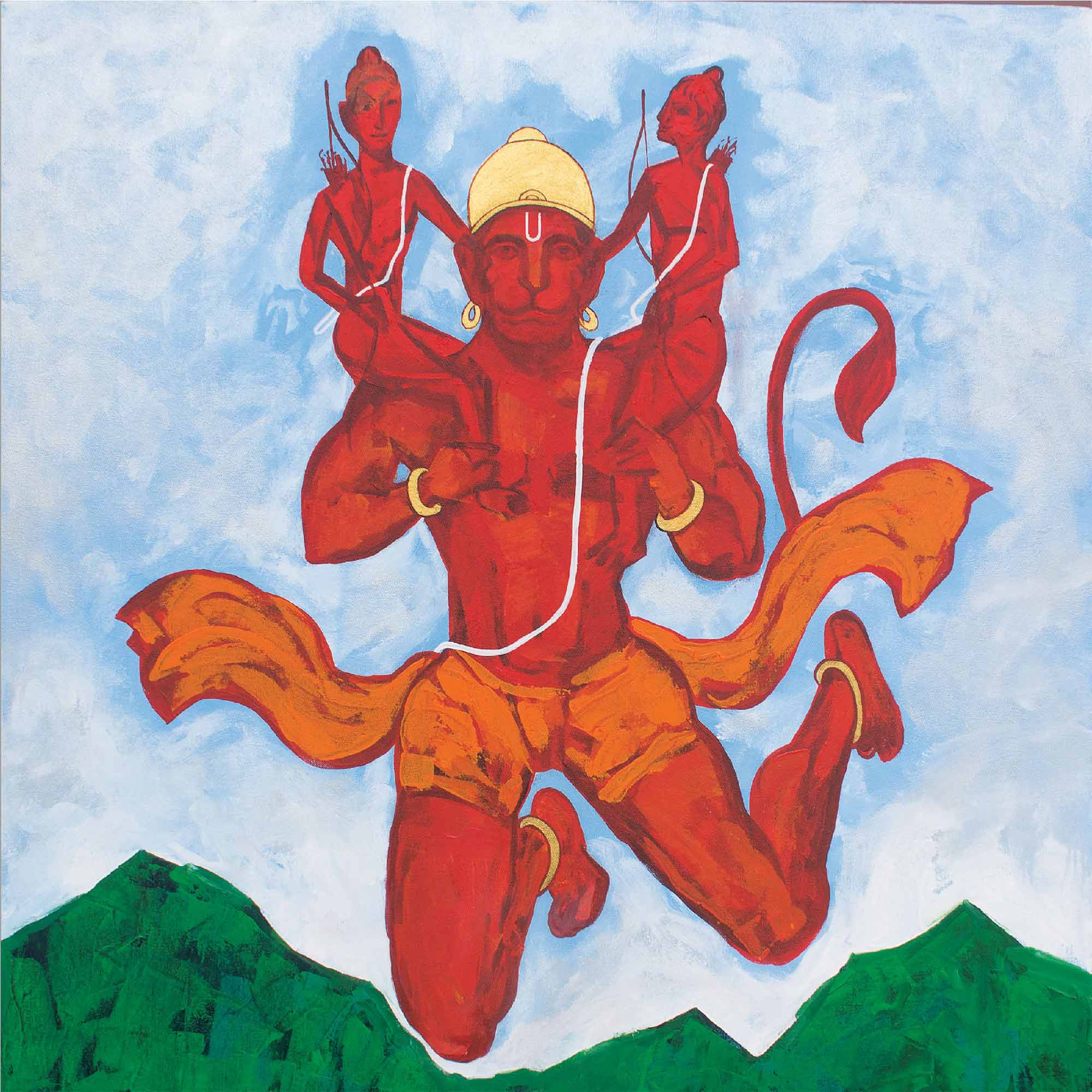
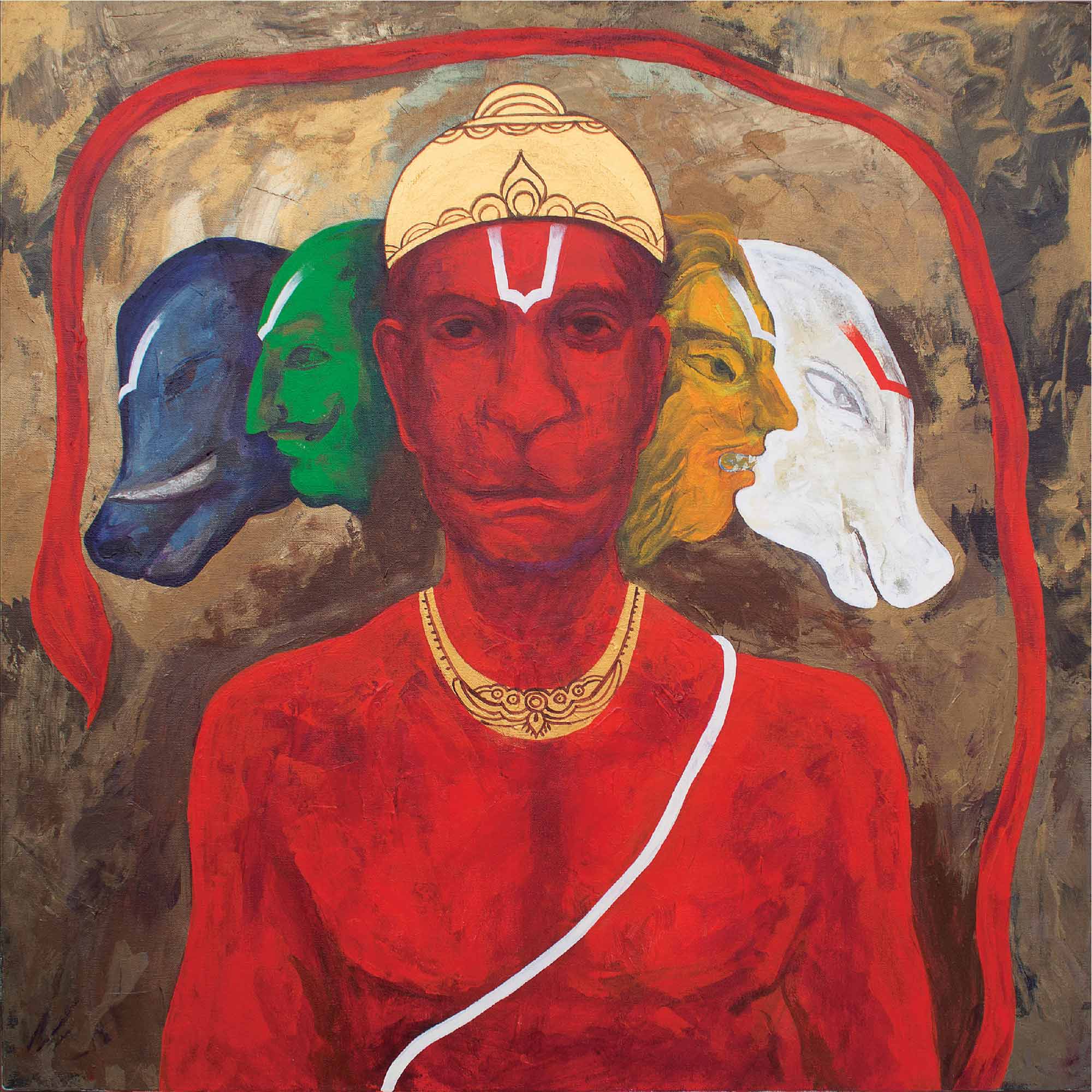
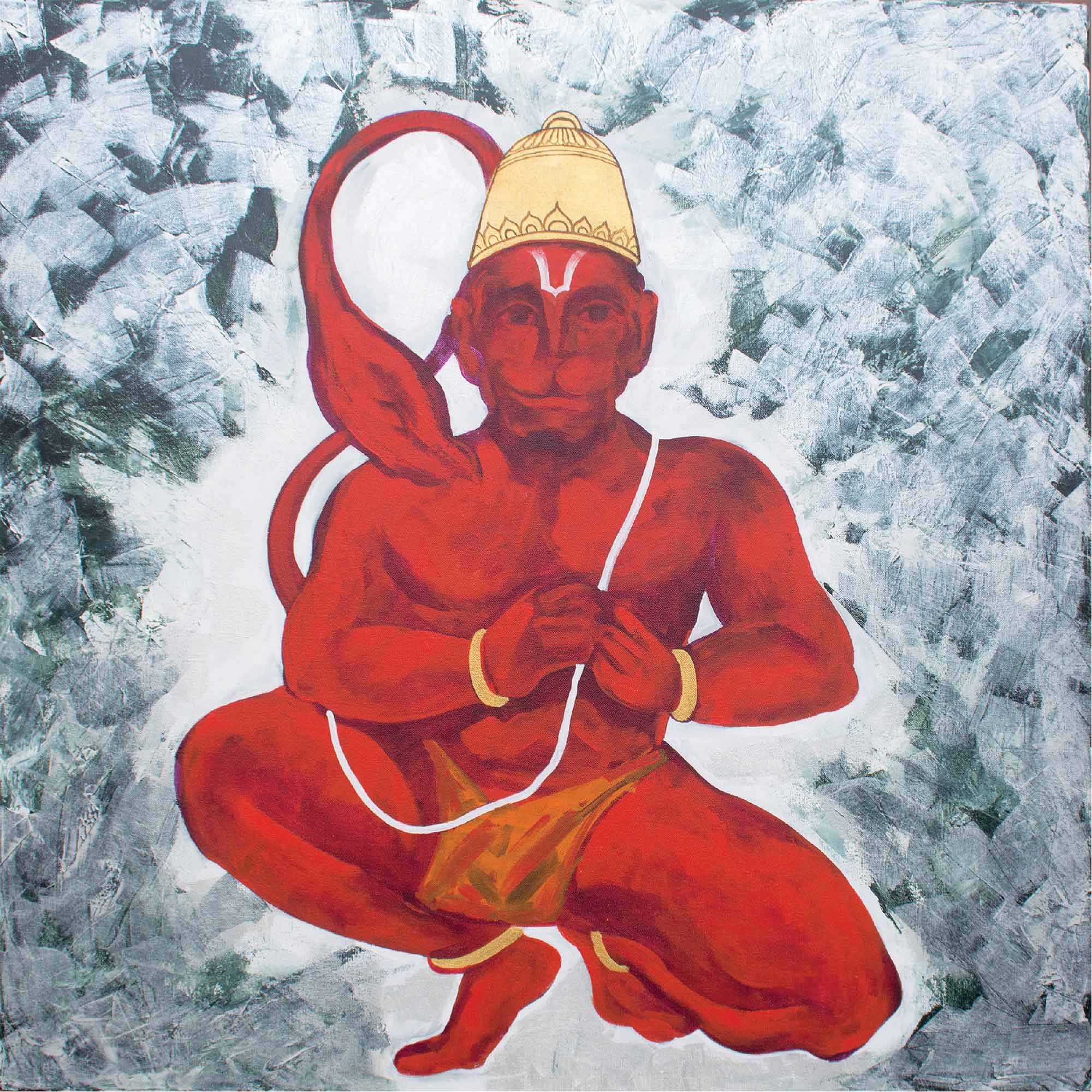
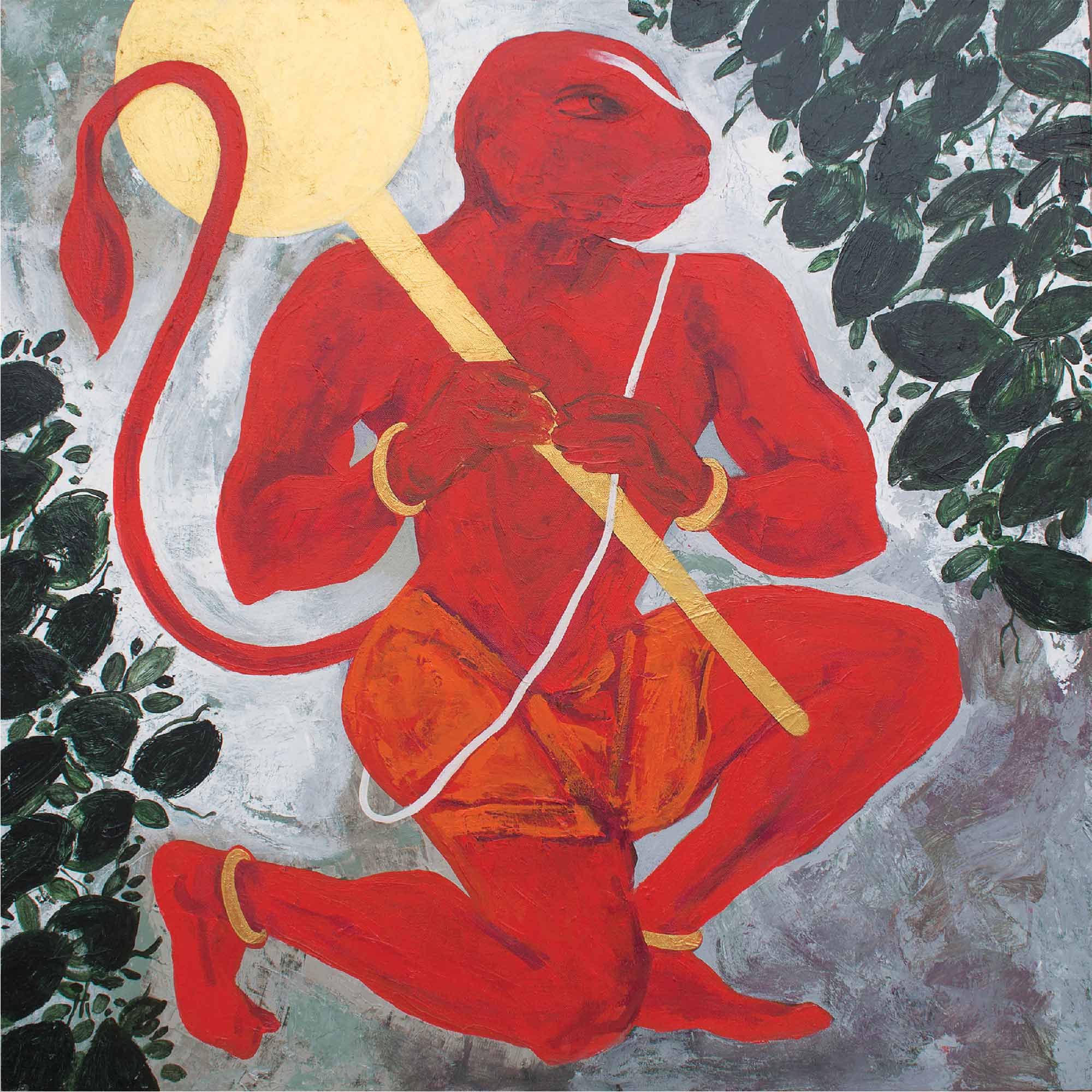
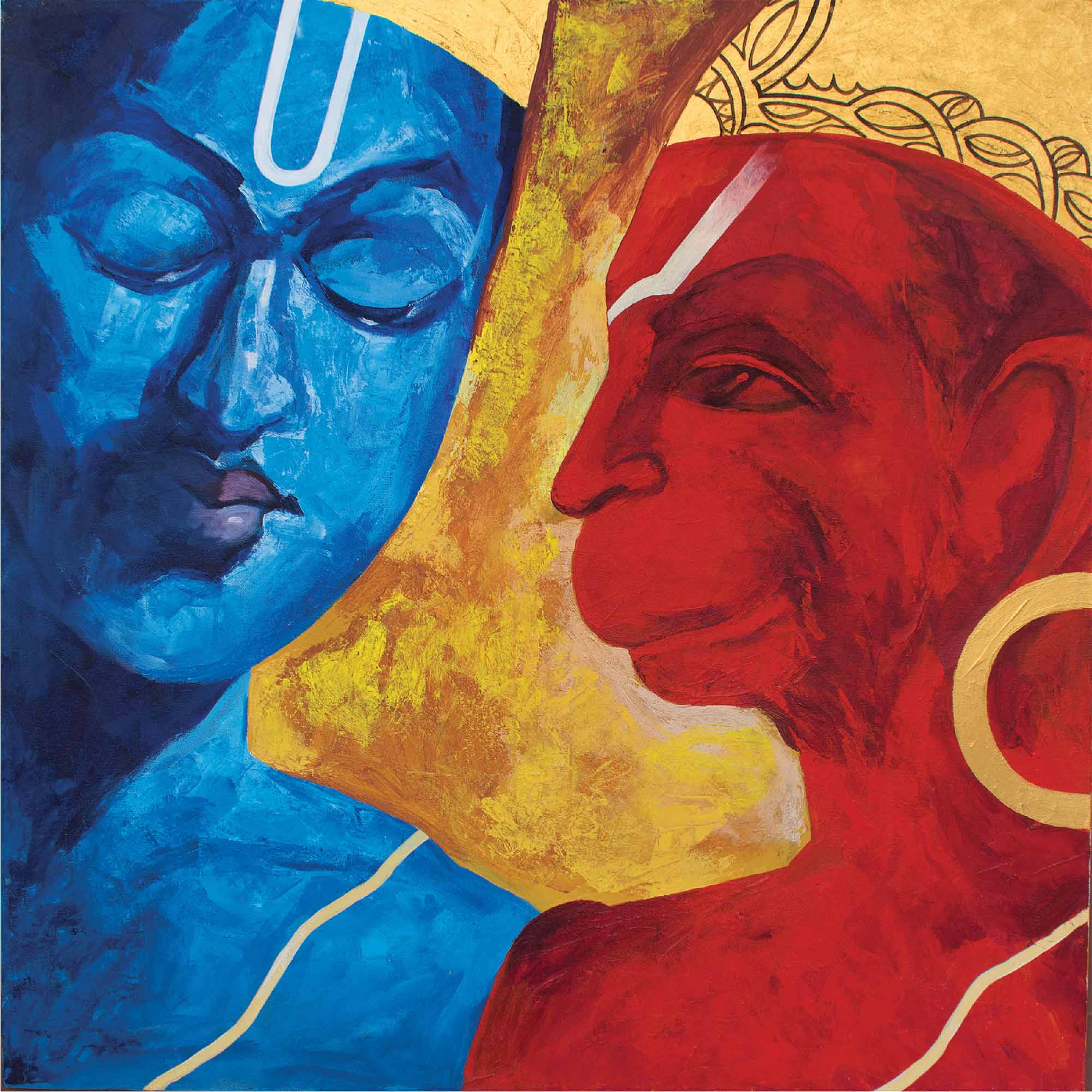
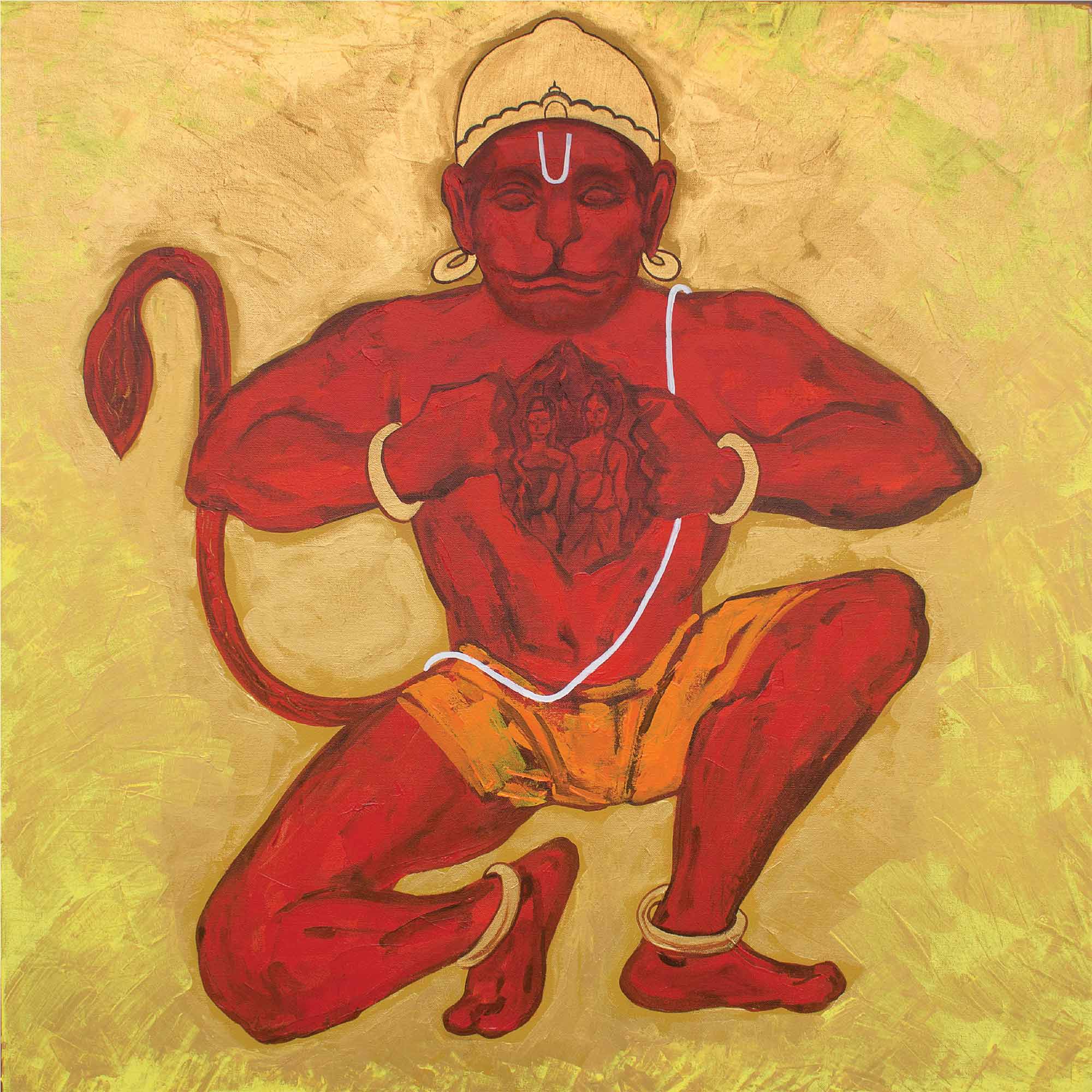
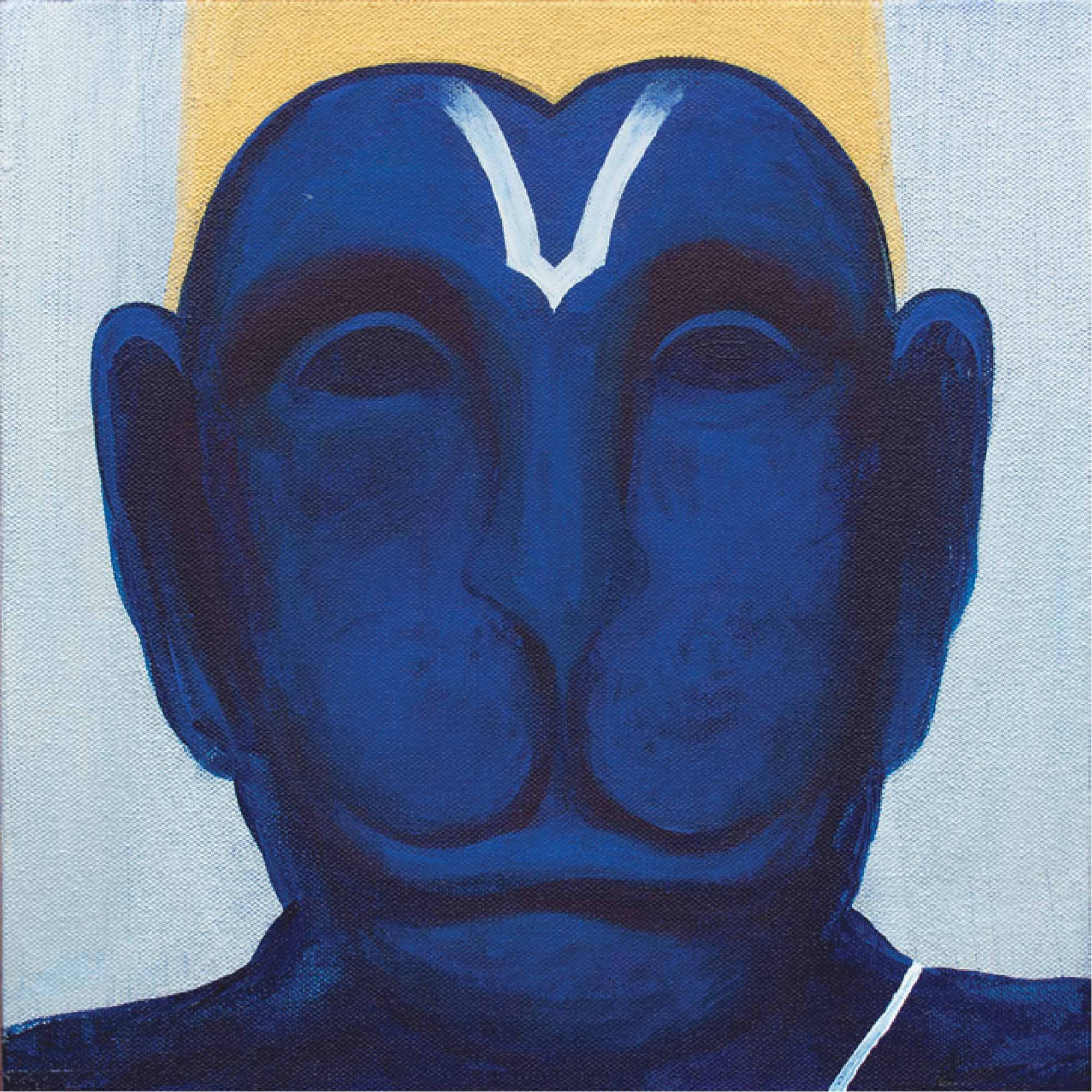
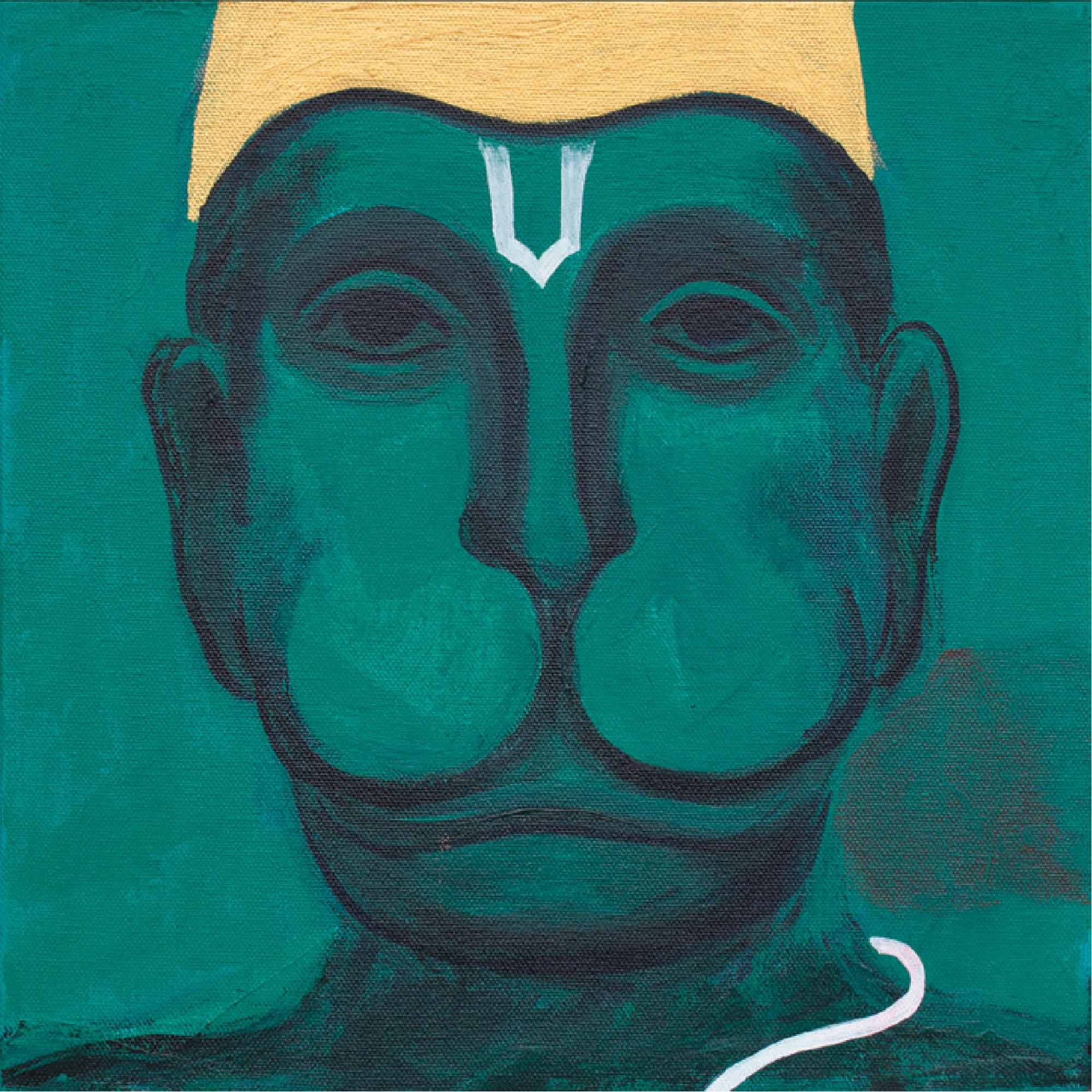
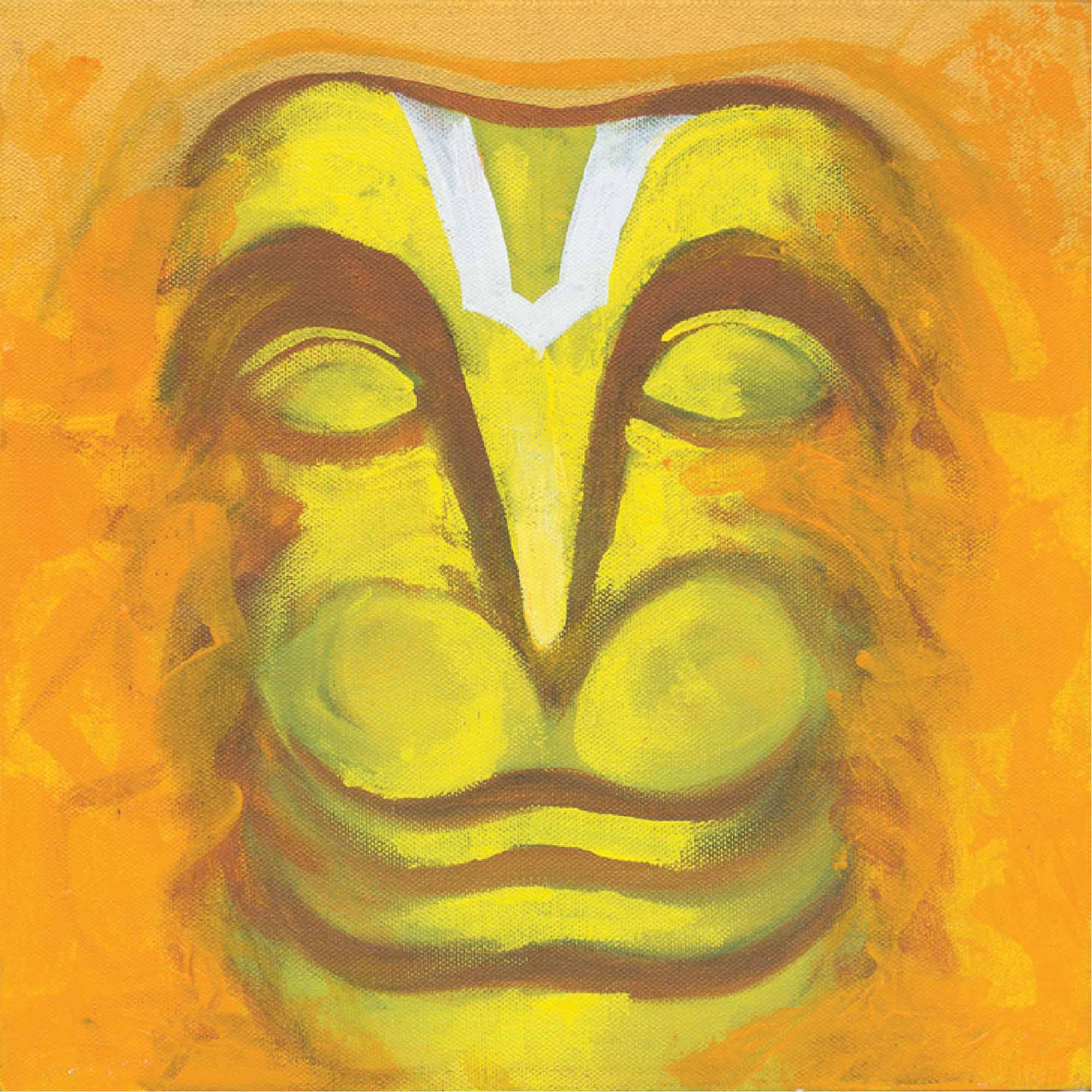
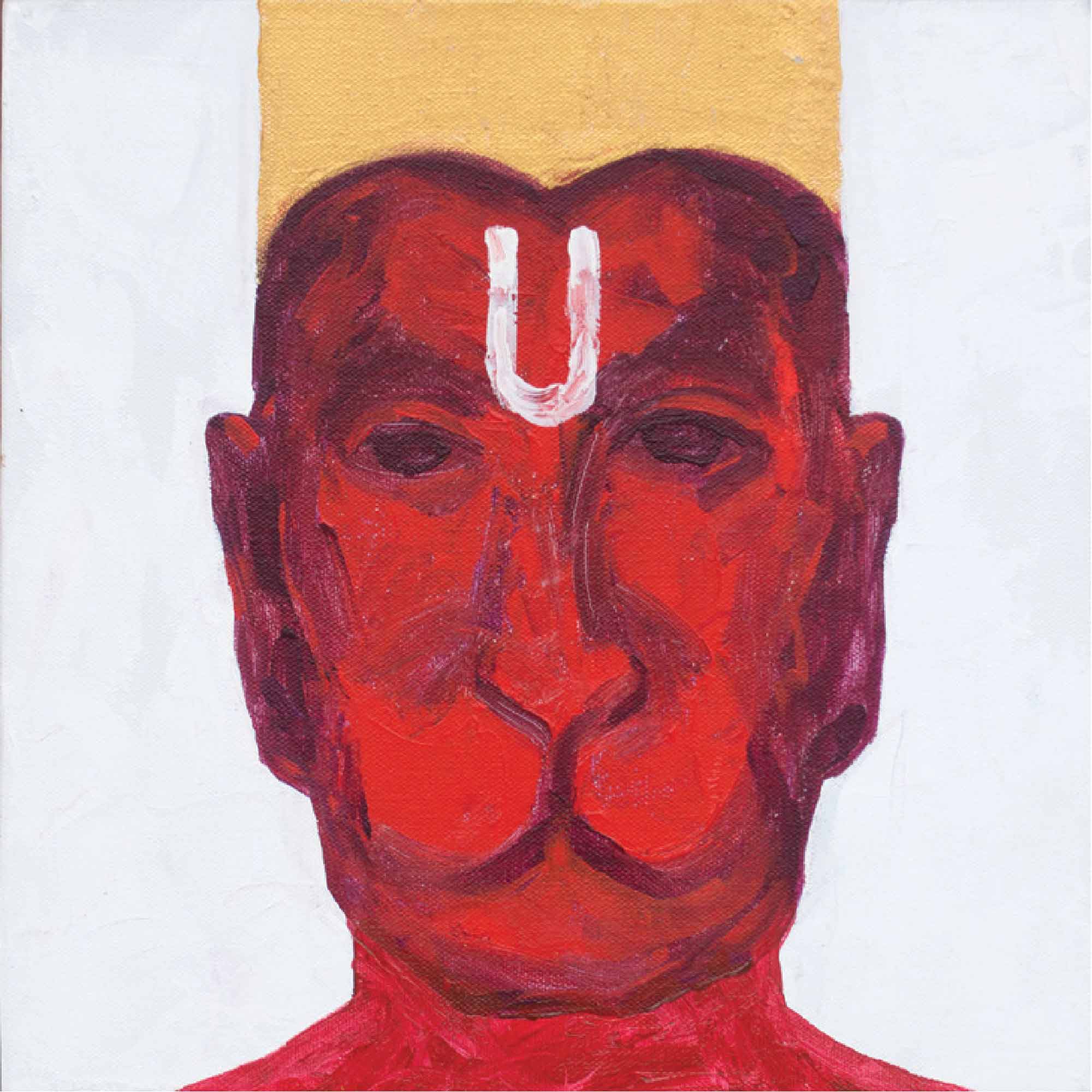
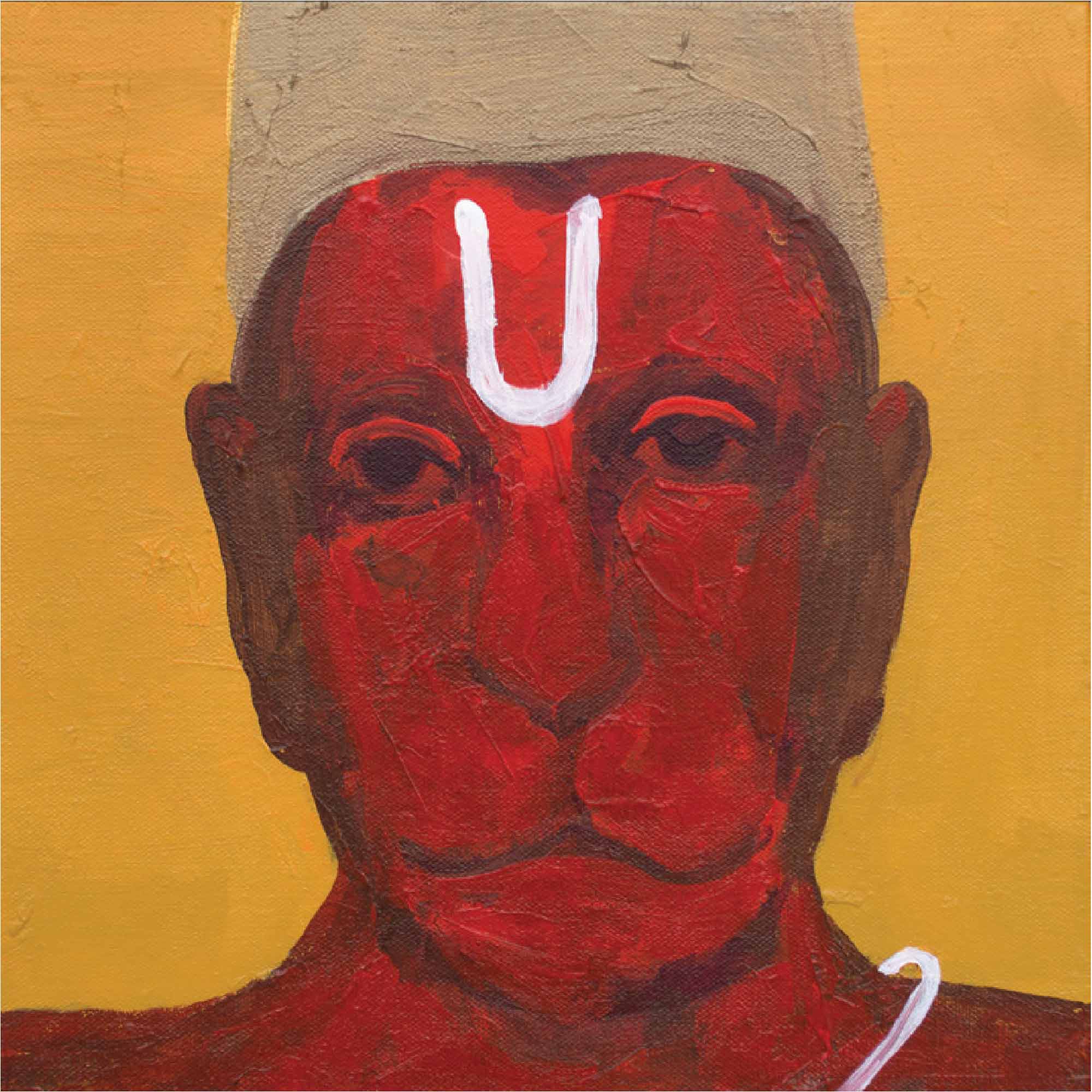
In these twelve paintings, the artists portrays the tranquil humility of Bhakta Hanuman, hands folded in surrender to Lord Rama; to the commanding presence of Veer Hanuman, boldly advancing into battle; setting Lanka on fire; carrying Dronagiri mountain; Hanuman trying to eat rising sun mistaken as a fruit; from the mystic energy of Panchamukhi Hanuman, with his five divine faces looking in all directions; to the vigilant Dakshinamukhi Hanuman, overseeing the devotee’s spiritual challenges -- every form possesses deep symbolic significance. Bharat Tripathi has portrayed these representations and has brought them to life.
To render Hanuman is to embrace a significant artistic and spiritual obligation. In this collection, we witness not just a repetition of familiar imagery but an engaging conversation between the divine and the modern, between inner faith and outward expression. The artist’s brush and vermillion colour serve as a medium -- not just of artistic expression, but of prayer.
As you explore this catalogue, may you perceive Lord Hanuman not just as a mythological entity, but as a vibrant energy -- alive, dynamic, and present. Whether you are captivated by the peace in his gaze, the power in his movement, or the compassion that fills his essence, may these paintings, inspired from deep within, remind us that the divine manifests in myriad forms, and that art, at its finest, serves as a means of darshan.
May Lord Hanuman’s blessings fill our lives with happiness and calm
“Anjaneya” meaning son of Anjana is one of the many names of Bajrang Bali or Hanuman one of the most revered Gods in Hindu mythology.
My first solo show, Navdurga, in 2009 happened quite by chance. I had picked up the brush again around the year 2000, after a gap of nearly twenty years since school. At the time, I was experimenting with different styles and discovering myself as an artist.
I had always wanted to paint nine shlokas from the Durga Saptashati, which praise Maa Durga, in a figurative abstract style. I started each painting during each day of Navratri and eventually completed the set. When I showed the works to my mentor, Raza ji, he responded warmly and encouraged me to exhibit them—offering to inaugurate the show himself. Still unsure of how the series would be received, I booked the gallery for just three days, assuming that friends would visit on opening day or drop by over the next two. However, the response was overwhelming, and the gallery extended the show by another week. This unexpected success inspired me to explore other mythological themes. Following Navdurga, I went on to create and exhibit series such as Dashavatar, The Story of Shiva, The Tirthankars, and Ramayan.
I grew up in a home where the Hanuman Chalisa was chanted every morning. It was part of my mother’s daily prayer routine, something she followed with quiet devotion. Just by listening to her every day, I learned it at a very young age. The Chalisa is made up of forty couplets, each just two lines long—hence the name Chalisa, which means forty. There’s a natural rhythm to it that stays with you. Even without music, it sounds melodic and powerful – staying with you long after you’ve heard it.
Hanuman is deeply revered by Hindus across the country, and many worship him in similar ways. Reciting the Hanuman Chalisa and visiting Hanuman temples on Tuesdays and Saturdays is a common ritual in many homes. I personally chant the Chalisa every day and try to visit a temple whenever I can on those days. When I visit Patna, my native place, stopping by the Hanuman temple is a must. Similarly, whenever I am in Delhi, I make it a point to visit a particular Hanuman temple near Connaught Place. Additionally, our family has a Hanuman temple in our ancestral village, built by my father, which I now take care of.
Because of this deep connection, I decided to dedicate an entire series of paintings to Hanuman, naming it Anjaneya, a name that resonates with me the most.
Hanuman’s importance in Hindu mythology is mainly highlighted in the Ramayan, where he is the devoted disciple of Lord Ram. Also called Vayuputra (son of the wind god) or Maruti, he is admired for his strength, courage, and selfless devotion. His role in the Ramayan is crucial, and most stories about him come from this epic.
What makes Hanuman unique is his form—he has the face of a monkey but the body of a human. There are many stories that explain this. One says his mother, Anjana, was cursed by a sage to take the form of a monkey until she gave birth to a strong son. That’s how Hanuman, also called Anjaneya (son of Anjana), got his monkey face.
Another story from his childhood tells of a time when Hanuman saw the bright sun and thought it was a fruit. Without knowing his own power, he flew up to swallow it. To stop him, Indra, the king of Gods, struck him with a thunderbolt, injuring his jaw. This injury gave him the name Hanuman, which means “disfigured jaw."
The Valmiki Ramayan describes the Vanar tribe as monkey-like but with human strength and intelligence. Hanuman is also seen as an incarnation or Rudra form of Lord Shiva in ancient texts
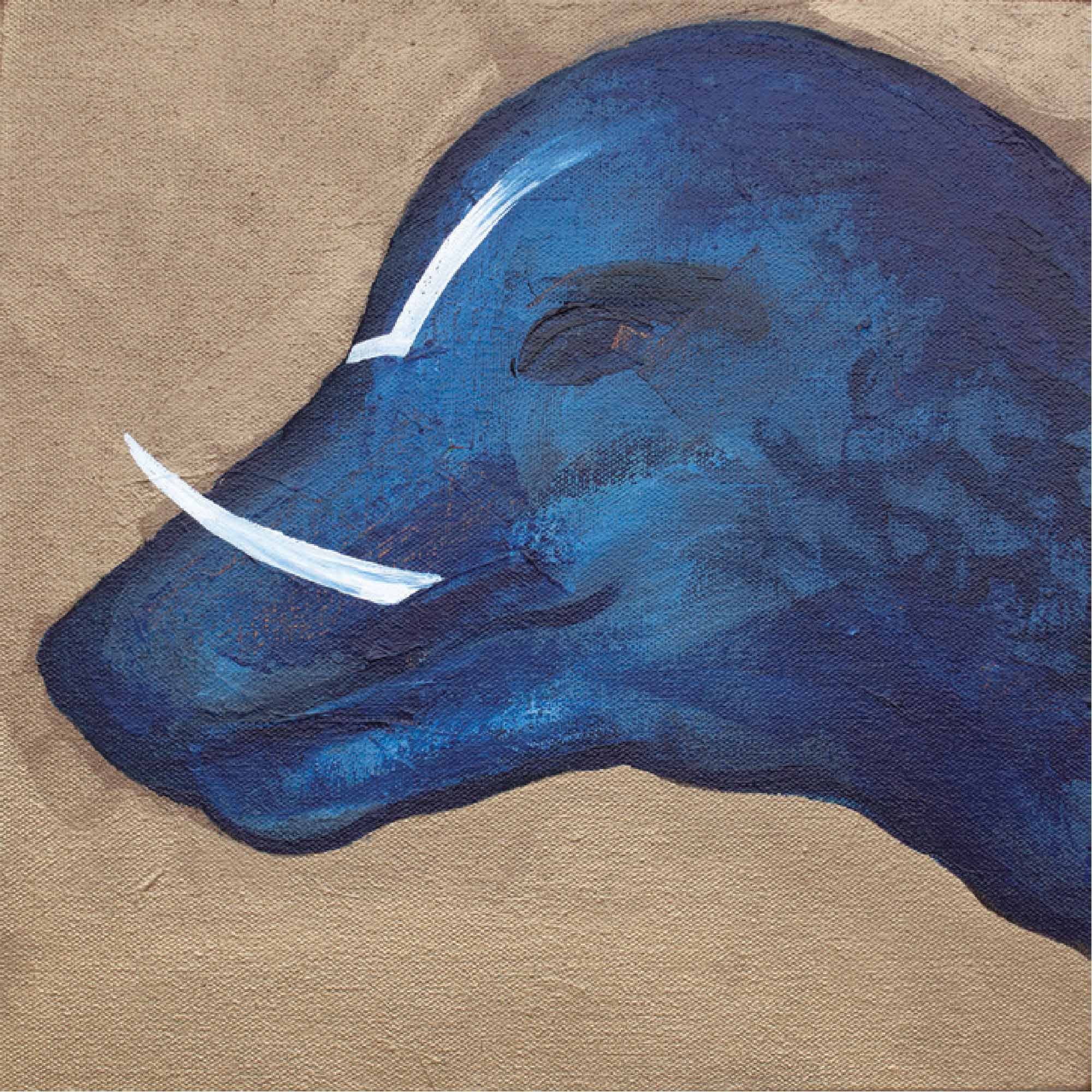
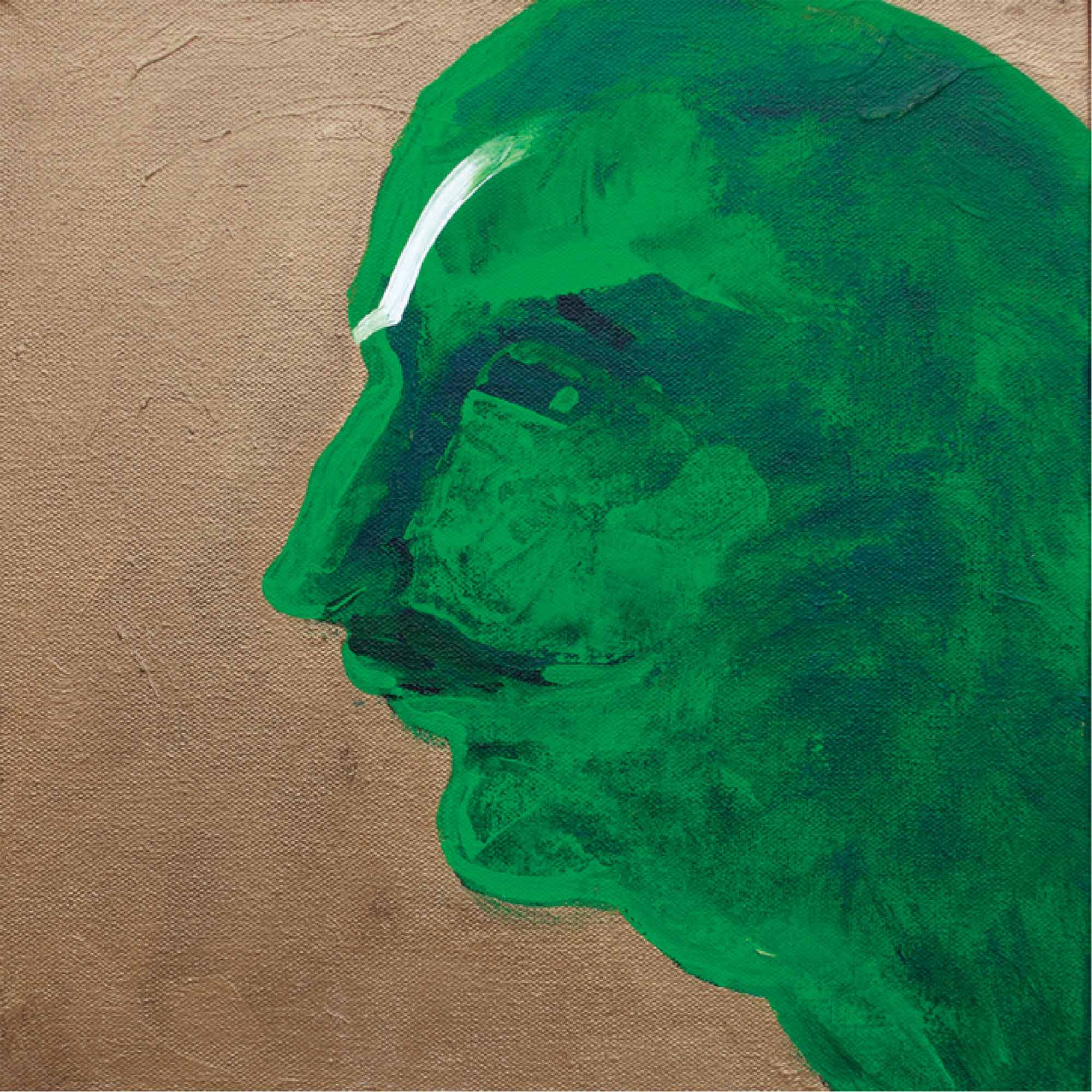
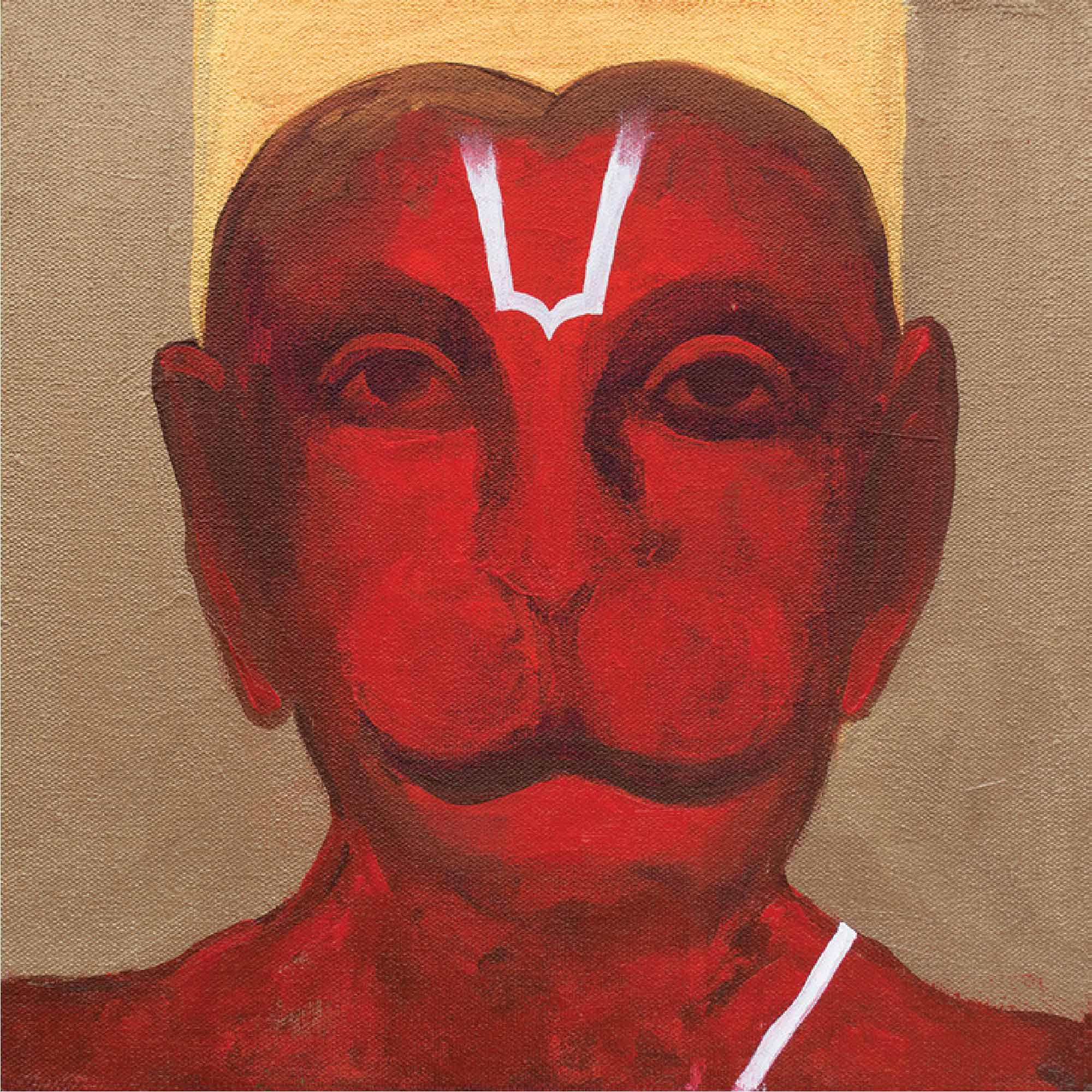
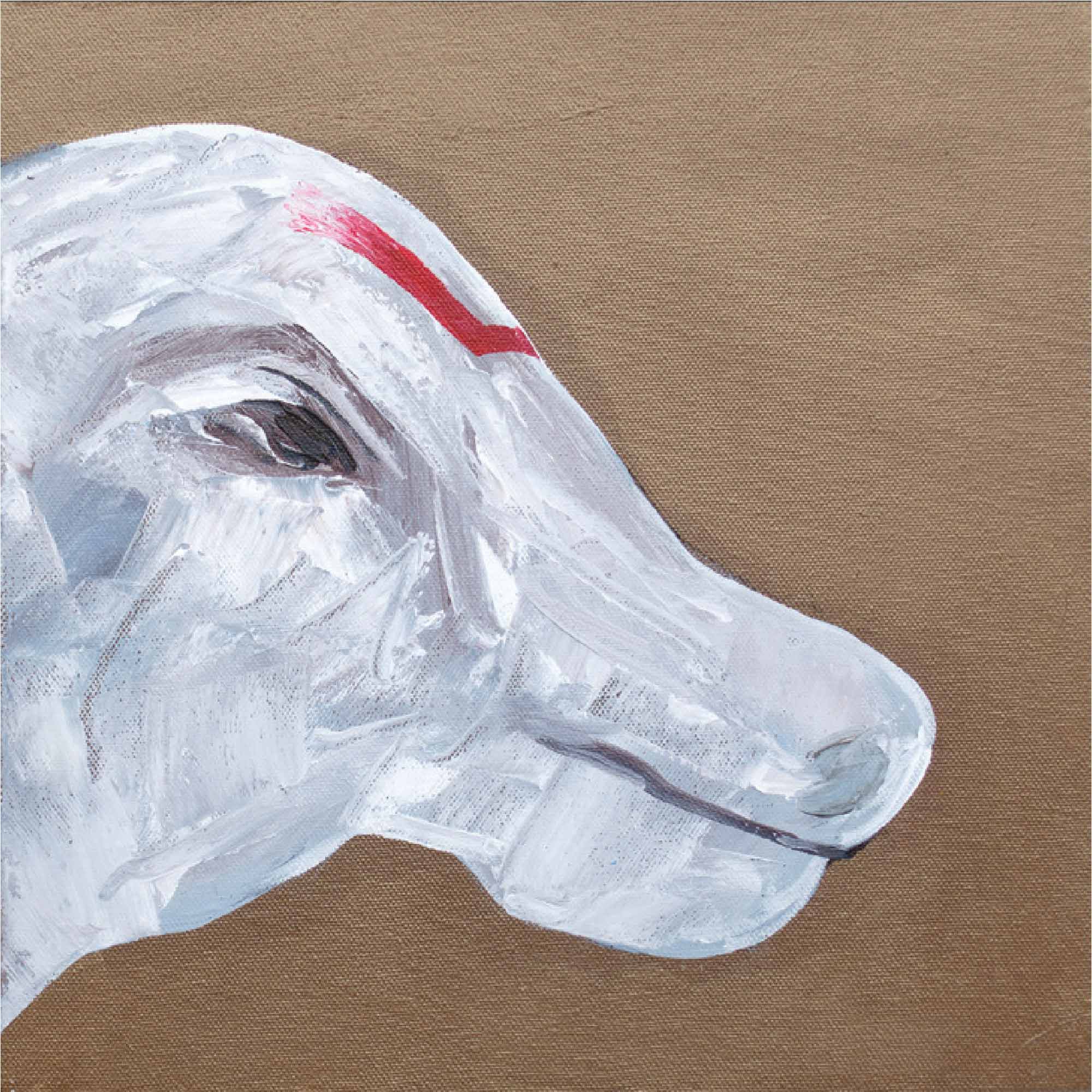
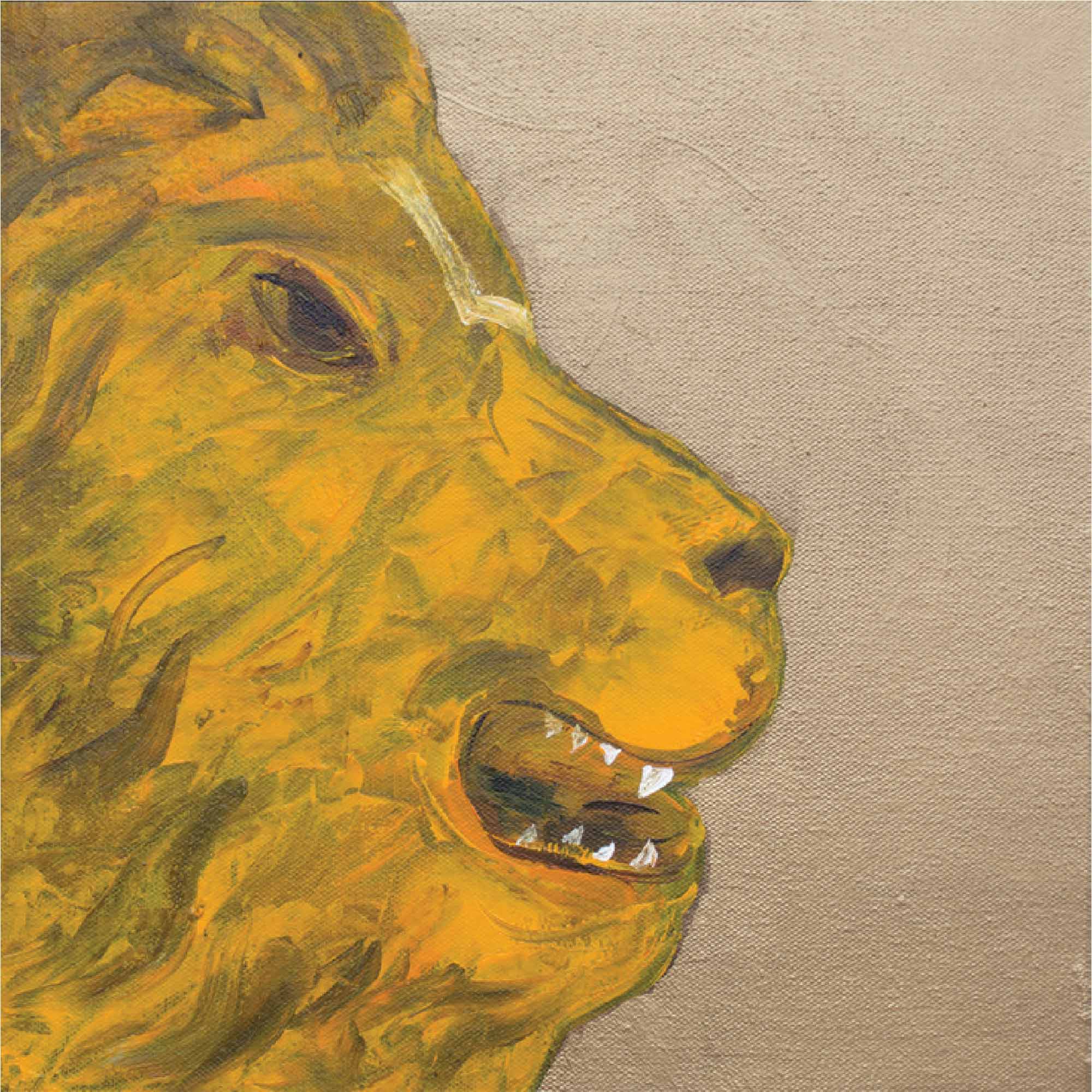
I have tried to depict the different stories and virtues of Anjaneya through my 12 paintings. These twelve forms are well known to anyone who believes in him. In all the paintings, Anjaneya’s body is painted red, while the other elements illustrate the story behind each form
It is believed that once Hanuman asked Maa Sita why she applied sindoor (vermilion) on her forehead. She explained that it was a symbol of her love, devotion, and a prayer for Lord Ram’s long life. Moved by this, Hanuman is said to have covered his entire body with sindoor. This is why statues of Hanuman in temples are always painted bright vermilion red.
I will always remain indebted to S.H. Raza for recognizing my latent talent, and to Anjolie Ela Menon for imparting techniques that no art school could have taught. This show has been nearly nine years in the making, and it is my first since the passing of my parents. I dedicate it to them—with love and reverence—as both were staunch devotees of Hanuman, a legacy of faith and strength that I continue to carry with me.

When one listens to the heart and is passionately with something, there is nothing to hold back. Bharat thripathi, a Mumbai based artist, just love to paint. His work are very conceptual and thematic. He is greatly inspire by the Indian mythology and religions, and present them in a figurative abstract form. He believes that the art of religion is the best of all arts and the story of religion is the best of all stories. Hit themes are very strong but he expresses them on canvas in simplistic forms, which clearly reflects his knowledge and depth on the subject.
He was always interested in art and won many awards in his early part of his life. His passion got buried in his quest for a career in civil services, when he joined the Indian revenue service in 1988. Double graduate from Harvard university, USA, where he has done management and masters in international taxation from Harvard law school.
He kept his interest alive though it was only limited to visiting the art galleries in india or abroad. He picked up the brush once again in the year 1999-2000 after a change meeting with raza who not only inspired but also encouraged his to paint. He mentored his for about 10 year and opened his first solo show in 2009. He is presently under the tutelage of Ms Anjolie Ela Menon for the last five years.
My present works are inspired form Ramayana, one of our greatest epics and the story is known to almost every Indian. Ramayan is divided into chapers called kaand. For instance baalkaand is from the birth of rama to his marriage to sita; ayodhya kaand is the exile of rama for 14 years; aranya kaand is the time spent by rama, sita and lakshman in the forest where shoorpanakha tries to unsuccessfully seduce rama and as revenge ravana abducts sita; kishkindha kaand is when rama and laksham reach kiskindha in search of sita meet sugreev, the king of vaanar (monkeys); sunder kaand is entirely dedicated to hanuman and rama reaching lanka and killing of ravana, sita’s agni pariksha, and rama coming back to ayodhya after 14 year of exile to become the king of ayodhya. Uttar kaand is believed to have been written later, which narrates banishment of sita, birth of luv kush, the sons of rama, aswamedha yagna and sita entering the earth her mother.